
Compassion as resistance: Jesus wept
Jul 29
/
Melodie Scalf
Compassion as resistance: Jesus wept
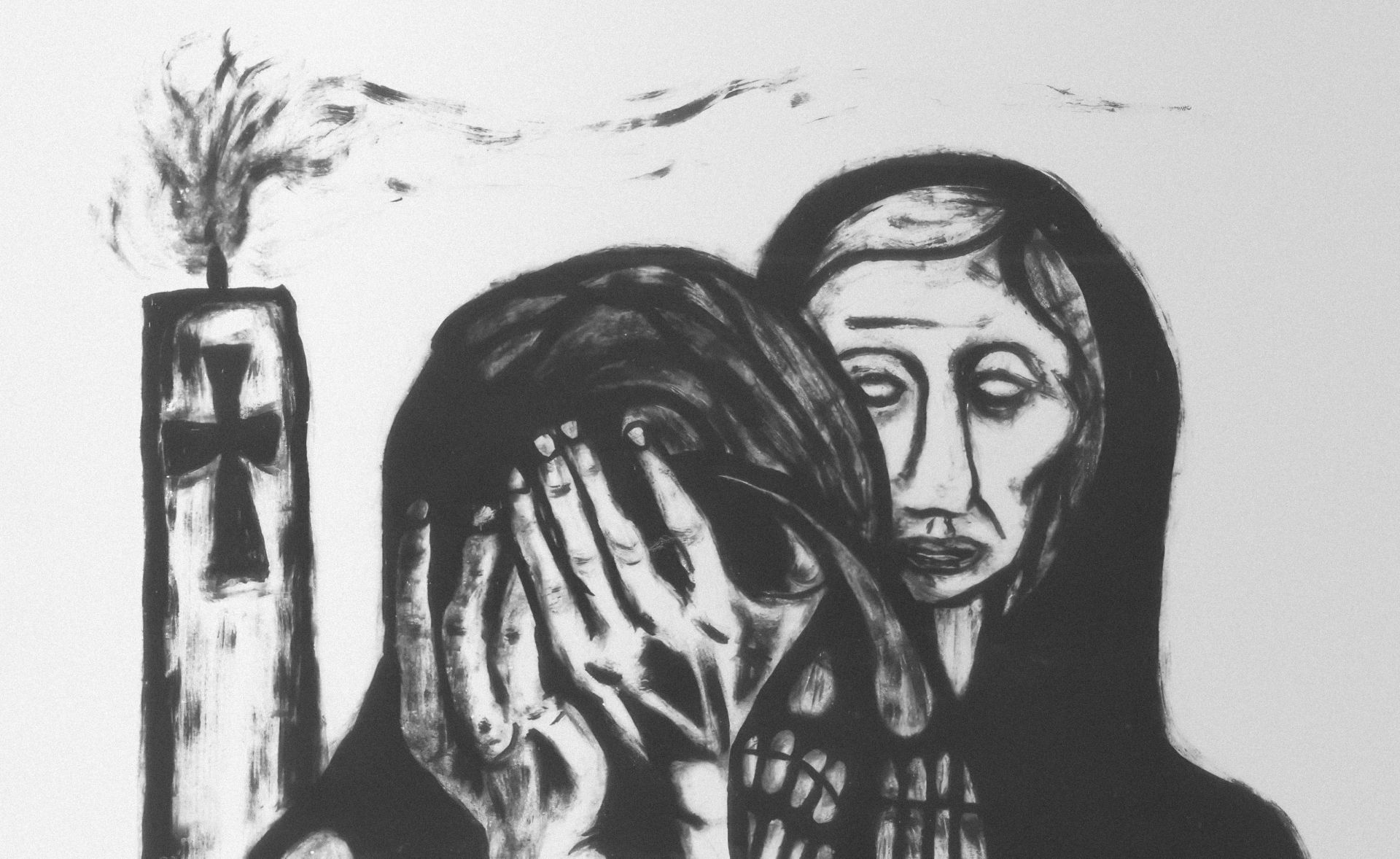
When Jesus saw her weeping, and the Jews who came with her also weeping, he was moved in spirit and troubled; and he said, “Where have you laid him?” They said to him, “Lord, come and see.” Jesus wept. (John 11:33-35)
I’ve read this verse many times, along with others that note Jesus being moved in spirit or with compassion. These scriptures have comforted me when I found myself in rooms where the primary image of God was distant and intangible. This passage shares about the God who is with us.
When I think of the image of a distant god, it usually comes with sweeping phrases and far-off, untouchable notes. As I consider God as love and how love enters my heart, inviting me, with kindness, into a place of beauty and newness in my life, I can imagine a relationship, a withness. An image much like Mary’s in John’s passage above. Jesus is approachable; we see this by Mary running to him, weeping in her vulnerable state of sadness over the loss of her brother Lazarus. Jesus allows himself to enter the pain instead of employing trite phrases of hope to ease his discomfort of being near grief. Rather, Jesus walks with those who weep, weeping along with them, allowing grief its rightful place in this moment of loss and suffering.
In his book The Prophetic Imagination, Walter Brueggemann comments on this scene: “The fact that Jesus weeps and that he is moved in spirit and troubled contrasts remarkably with the dominant culture. That is not the way of power, and it is scarcely the way among those who intend to maintain firm social control. But in this scene, Jesus is engaged not in social control but in dismantling the power of death, and he does so by submitting himself to the pain and grief present in the situation, the very pain and grief that the dominant society must deny.”
Looking around at the dominant culture, Jesus saw rampant numbness in Jerusalem as a form of social control. By entering into the pain, Jesus subverts the powers at large; he dares to show up as an embodied alternative consciousness. He dares to replace numbness with compassion. He embodies and internalizes the pain, while also externalizing the transformation of marginalized people and social arrangements that the dominant culture thrives on keeping numb, nullifying their pain.
Walter Brueggemann goes on to write, “Jesus had the capacity to give voice to the very hurt that had been muted, and therefore newness could break through. Newness comes precisely from expressed pain. Suffering made audible and visible produces hope; articulated grief is the gate of newness, and the history of Jesus is the history of entering into the pain and giving it voice.”
Jesus is showing us the way to be fully human; he invites us to grow in compassion for ourselves and for those around us. If we accept the invitation to expand our capacity for compassion, we can experience a deep sense of connection to self and others. Our opting into a compassionate awareness prepares our body and the collective bodies around us to harmonize, creating a sense of belonging. The gift of allowing ourselves and others to become fully human through an expression of compassion and connection can lead to social change.
We will all experience struggle as we become fully human.
As news reports continue to flood the airwaves with devastating accounts of disaster, pain, and suffering. I wonder what you notice in your body as you read these words?
I invite you to sit with each of the following words and just observe how your body responds
Numb
Compassion
Grief
Pain
Is there a sensation in your body, an image, or a texture that comes to mind?
Take a few moments and be with your noticings. (I wonder if there is a possibility to allow compassion for all that we are noticing - even the numbness.) Invite the sacred presence that you know to be with you as you sit with and tend to what arises.
If it feels right, take a few deep breaths.
When you are ready, consider journaling about what you experienced or take a walk to help metabolize any strong feelings. Finally, allow gratitude for embodying this practice.
Walter Brueggemann, The Prophetic Imagination (p 91), Fortress Press
When Jesus saw her weeping, and the Jews who came with her also weeping, he was moved in spirit and troubled; and he said, “Where have you laid him?” They said to him, “Lord, come and see.” Jesus wept. (John 11:33-35)
I’ve read this verse many times, along with others that note Jesus being moved in spirit or with compassion. These scriptures have comforted me when I found myself in rooms where the primary image of God was distant and intangible. This passage shares about the God who is with us.
When I think of the image of a distant god, it usually comes with sweeping phrases and far-off, untouchable notes. As I consider God as love and how love enters my heart, inviting me, with kindness, into a place of beauty and newness in my life, I can imagine a relationship, a withness. An image much like Mary’s in John’s passage above. Jesus is approachable; we see this by Mary running to him, weeping in her vulnerable state of sadness over the loss of her brother Lazarus. Jesus allows himself to enter the pain instead of employing trite phrases of hope to ease his discomfort of being near grief. Rather, Jesus walks with those who weep, weeping along with them, allowing grief its rightful place in this moment of loss and suffering.
In his book The Prophetic Imagination, Walter Brueggemann comments on this scene: “The fact that Jesus weeps and that he is moved in spirit and troubled contrasts remarkably with the dominant culture. That is not the way of power, and it is scarcely the way among those who intend to maintain firm social control. But in this scene, Jesus is engaged not in social control but in dismantling the power of death, and he does so by submitting himself to the pain and grief present in the situation, the very pain and grief that the dominant society must deny.”
Looking around at the dominant culture, Jesus saw rampant numbness in Jerusalem as a form of social control. By entering into the pain, Jesus subverts the powers at large; he dares to show up as an embodied alternative consciousness. He dares to replace numbness with compassion. He embodies and internalizes the pain, while also externalizing the transformation of marginalized people and social arrangements that the dominant culture thrives on keeping numb, nullifying their pain.
Walter Brueggemann goes on to write, “Jesus had the capacity to give voice to the very hurt that had been muted, and therefore newness could break through. Newness comes precisely from expressed pain. Suffering made audible and visible produces hope; articulated grief is the gate of newness, and the history of Jesus is the history of entering into the pain and giving it voice.”
Jesus is showing us the way to be fully human; he invites us to grow in compassion for ourselves and for those around us. If we accept the invitation to expand our capacity for compassion, we can experience a deep sense of connection to self and others. Our opting into a compassionate awareness prepares our body and the collective bodies around us to harmonize, creating a sense of belonging. The gift of allowing ourselves and others to become fully human through an expression of compassion and connection can lead to social change.
We will all experience struggle as we become fully human.
As news reports continue to flood the airwaves with devastating accounts of disaster, pain, and suffering. I wonder what you notice in your body as you read these words?
I invite you to sit with each of the following words and just observe how your body responds
Numb
Compassion
Grief
Pain
Is there a sensation in your body, an image, or a texture that comes to mind?
Take a few moments and be with your noticings. (I wonder if there is a possibility to allow compassion for all that we are noticing - even the numbness.) Invite the sacred presence that you know to be with you as you sit with and tend to what arises.
If it feels right, take a few deep breaths.
When you are ready, consider journaling about what you experienced or take a walk to help metabolize any strong feelings. Finally, allow gratitude for embodying this practice.
Walter Brueggemann, The Prophetic Imagination (p 91), Fortress Press

Melodie Scalf
Melodie is a certified spiritual director with over 20 years of experience in congregational and children's ministry. With her background in integrative health and wellness, Melodie engages her directees through a holistic lens, combining a variety of modalities in her practice.
Melodie has a passion for hiking mountains and spending time in the outdoors. When not outside she can be found playing boardgames and doing puzzles with her family.
Currently, she accompanies individual directees and offers small group spiritual direction. She would love to guide a wilderness experience or embodiment workshops for you or your small group.
You can connect with her via her website www.walkingbeloved.com or through email: melodie@walkingbeloved.com
Melodie is a certified spiritual director with over 20 years of experience in congregational and children's ministry. With her background in integrative health and wellness, Melodie engages her directees through a holistic lens, combining a variety of modalities in her practice.
Melodie has a passion for hiking mountains and spending time in the outdoors. When not outside she can be found playing boardgames and doing puzzles with her family.
Currently, she accompanies individual directees and offers small group spiritual direction. She would love to guide a wilderness experience or embodiment workshops for you or your small group.
You can connect with her via her website www.walkingbeloved.com or through email: melodie@walkingbeloved.com

Copyright © 2026
Tax ID: 92-0930963
Mailing Address
1205 E Oak Knoll Ct
Newberg, OR 97132
1205 E Oak Knoll Ct
Newberg, OR 97132
Resources
-
Join Our Newsletter
-
Donate
Social