
What Poetry Knows That Advice Does Not
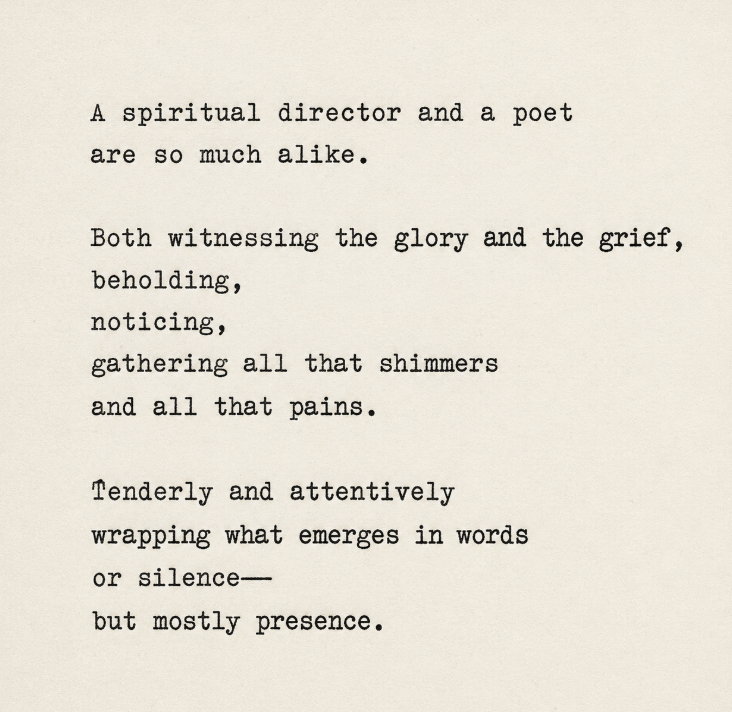
There’s a temptation in spiritual direction to become a sage teacher—to respond to questions with wisdom rather than allowing wisdom to emerge from the person before us. And in a world where answers can be googled in an instant, and AI can act as a companion, advisor, and assistant, the draw to clarity rather than complexity is strong. But there are moments when advice arrives too soon. There are experiences that become distorted when we require them to take the neat shape of a spiritual lesson. Some griefs cannot be solved, and some desires require time and presence to discover the language or image that suits them. And finally, there are questions that become smaller when we rush to answer them.
Unlike the person prone to quick advice, the poet knows how to wait and to linger in the unknown. And this summer, poetry has been teaching me to resist the urgency to understand my life so that I can instead be wildly present to my life and to the lives of those I companion. The poetic imagination has captivated me. I find myself reading Wendell Berry while drinking my morning coffee and walking on the treadmill while reading David Gate, laughing hard enough that I receive startled looks from the very serious runners at the gym. I wander my neighborhood while listening to Maggie Smith’s Dear Writer, and I notice myself seeing the world differently—both more acutely and generously.
Reading and writing poetry has become a spiritual practice. It has also begun to reshape how I understand my vocation as a soul companion, and it resonates deeply with parts work, which invites us to recognize that a person is not as singular or easily defined as we sometimes imagine. We each carry many parts: protectors, critics, frightened children, hopeful dreamers, and voices that have learned to remain hidden. Each part has its own history, fears, desires, and ways of making sense of the world.
Advice is often tempted to decide which of these parts should be trusted, changed, corrected, or silenced, but poetry begins somewhere else. A poet begins by noticing all the parts that are easily discarded. They linger with the nagging image, the unfinished thought, the strange comparison, the mysterious grief, and all the moments of ordinary beauty because the poet receives these fragments as worthy of dignity and attention.
A soul companion practices a similar kind of listening. As we hold space for another person to articulate the texture of their soul—or simply to rest in holy silence—we listen for what is emerging beneath and between the words. We notice the fragments. We notice the parts of a person or their story that long to be heard, welcomed, and nourished. A fragment might become a theme or might simply be offered as an aside. Someone may say, “I feel as though I am carrying a weight,” or “I am standing outside my own life,” or “Everything feels foggy," or "That feels too selfish."
Advice would respond by trying to remove the weight, open the door, find a path through the fog, or correct a false belief, but the poet and the soul companion practice a type of curiosity that slows things down.
Where in your body do you feel that weight?
How long have you been carrying it?
What do you sense as you imagine opening the door?
What can you see in the fog, and what remains hidden?
What part of you speaks those words?
As I have listened to my own life with a more poetic imagination, I have found that parts of me are more eager to speak. They offer me images, memories, sensations, questions, and scraps of language like little gifts to be collected and treasured. They hardly ever arrive in complete sentences, and they get a little touchy when I try to resolve them into a poem to which they do not belong. There’s an element of tarrying with the fragment so it might reveal itself.
The word fragment began reminding me of a line from Jesus I had mostly passed over before.
“Gather up the fragments left over, so that nothing may be lost.” (Jn 6.12)
The command comes after Jesus has miraculously fed the crowd. Everyone has eaten, and what remains are just bits of the miracle scattered about. I love this image. The things everyone else would have been content to leave behind, Jesus sees and instructs his disciples to gather them up. Nothing is to be lost, even the crumbs and broken pieces. I keep returning to those last words: that nothing may be lost. What would it mean to believe that God is interested even in the pieces of our lives we would rather leave scattered on the ground?
I’m not the only one captivated by this small command. Theologian Teresa Berger lingers with it in Fragments of Real Presence, wondering about the sacramental nature of gathering. She warns us that gathering does not mean forcing every fragment into a tidy whole. Wholeness is not something we can manufacture through effort or insight. Berger writes that even if wholeness remains beyond our power to make, “there is nevertheless a gesture toward a new wholeness inscribed in the very act of gathering.”
Sometimes the sacred work is simply refusing to abandon the fragments, and the poetic imagination helps us participate in this work, reminding the soul companion that they do not need to turn every sorrow into wisdom or every silence into speech. Sometimes our work is simply to remain present, to witness, to wonder, and to trust that attention itself can become a form of love.
There are times when advice is necessary. There are decisions to make, problems to address, and paths that require practical action. But before advice comes, there may need to be poetry. Before the next step, there may need to be attention. Before we ask what something means, we may need to notice what is sensed and felt. Before we try to become whole, we may need to gather the fragments tenderly.
Perhaps the poet and the spiritual companion are kindred spirits, lingering long enough to notice what others might pass by, gathering what has been scattered, and trusting that even the fragments belong.
So that nothing may be lost.
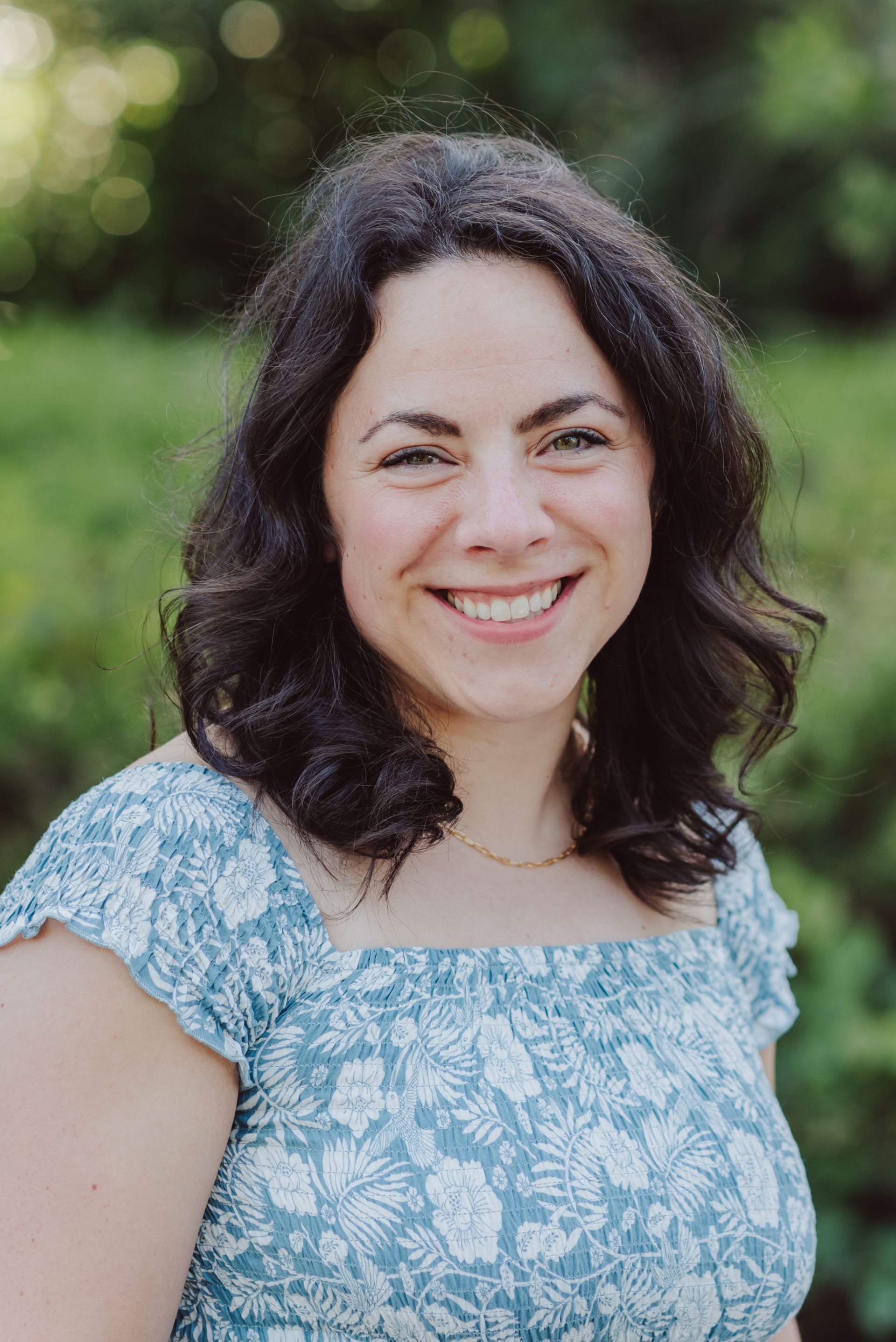
Abby Sham is a spiritual director, contemplative curator, and Doctor of Spirituality student at Claremont School of Theology. Certified through the Companioning Center and grounded in the compassionate, evocative model of soul care, she companions people from all walks of life—welcoming faith, doubt, diverse spiritual paths, and the creative ways we make meaning. Her trauma-informed approach weaves together Ignatian spirituality, Internal Family Systems, contemplative practices, and creativity to help people notice God’s presence in the ordinary rhythms of life.
Deeply impacted by the Companioning Center’s certificate program, Abby serves on its board with a hope to grow its reach and diversity, widening the welcome for those seeking formation and supporting a vibrant community for spiritual directors. She enjoys exploring Seattle’s parks and beaches with her two young children.
She holds an M.Div. from Seattle Pacific Seminary and an M.T.S. from Pentecostal Theological Seminary.
1205 E Oak Knoll Ct
Newberg, OR 97132
Resources
-
Join Our Newsletter
-
Donate
Social