Forgiveness as an Act of Self-Care
Apr 20
/
Katie Skurja
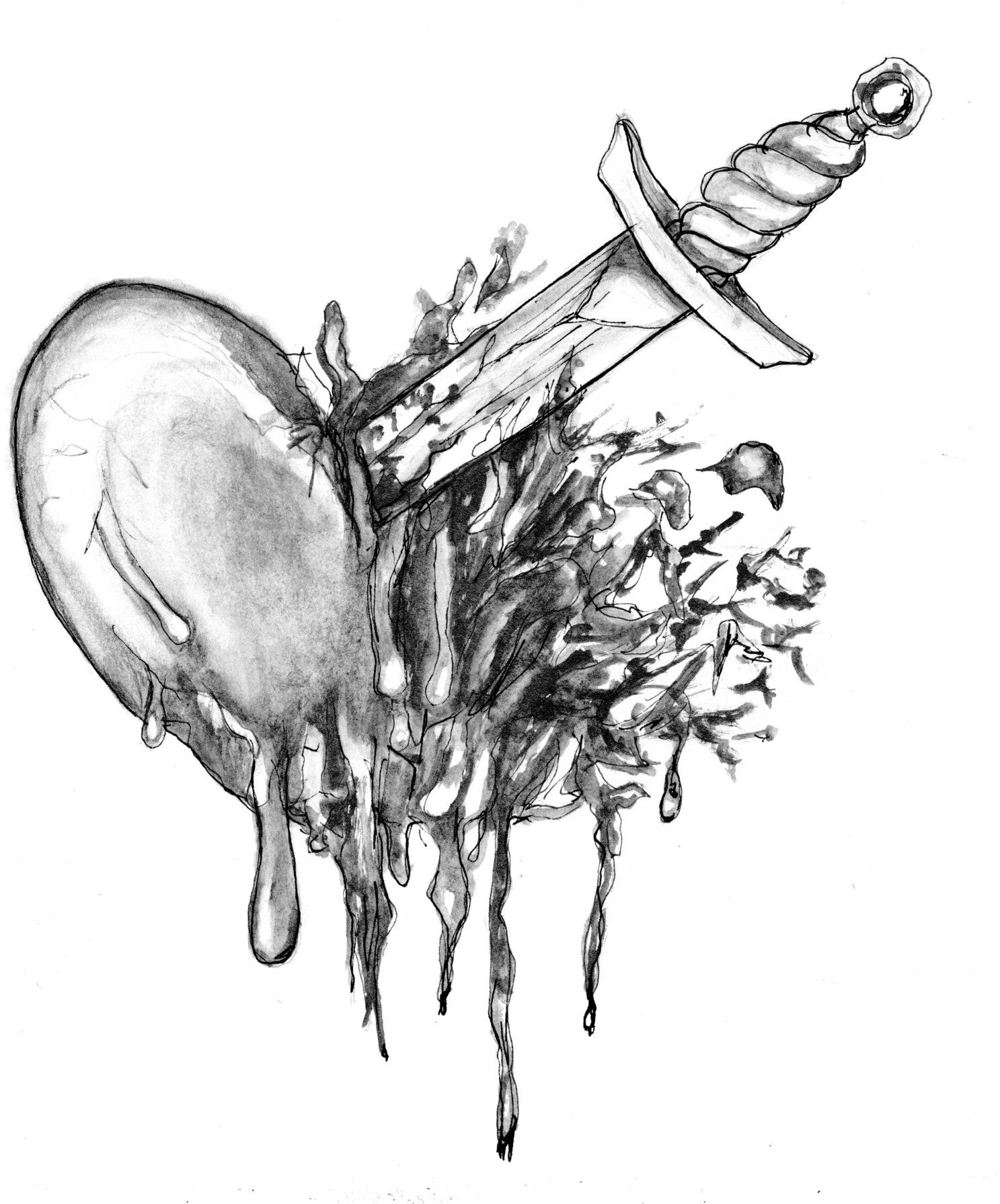
Illustration by Mary Welch
It was my first time as a volunteer in the women’s prison. As I scanned the room, getting my bearings of what exactly I had signed up for with the prison ministry team, I noticed a woman who radiated something I couldn’t quite explain.
There was a lightness about her. A steadiness. A kind of quiet joy that felt almost out of place in that environment. I found myself drawn to her and eventually asked about her story.
What I learned stopped me.
Years earlier, she had been driving under the influence and blacked out behind the wheel. She woke up to find out she had caused an accident that took the life of a seventeen-year-old boy.
As that realization set in, her life unraveled to the point it was no longer recognizable.
Her family distanced themselves. Her future collapsed. And she carried the unbearable weight of what she had done.
But that’s not the part of the story that stayed with me.
The boy’s mother began visiting her in prison.
Regularly.
She had forgiven her.
Not only that, she introduced her to the reality of a loving and forgiving God. Over time, a relationship formed. When the young woman was eventually released, it was into the care of the very family she had devastated. A short while later, she ended up marrying the cousin of the young man she killed.
Today, she returns to that same prison to offer hope to women who feel beyond redemption. She is passionate about sharing the power of forgiveness.
Stories like this raise all kinds of questions.
Are we supposed to forgive no matter what?
Is there ever a time not to forgive?
Does someone have to ask for forgiveness first?
And maybe underneath all of those is a quieter question:
What is forgiveness actually for?
One way I’ve come to understand it is this:
When someone wounds us, it’s like being struck by a dart. Or pierced by an arrow. Or skewered by a lance.
Some wounds are small. Others go deep.
But often, what does the most damage isn’t the initial wound - it’s the poison that comes with it.
Bitterness.
Resentment.
Shame.
The stories we begin to tell ourselves about what happened… and what it means about us.
Scripture speaks to this in a sobering way:
See to it that no bitter root grows up to cause trouble and defile many.1
The wound may have been inflicted in a moment.
But the poison spreads over time.
Forgiveness, in this sense, is not pretending the dart didn’t hit.
It’s not minimizing the wound.
And it’s not saying what happened was okay.
It is the process of dealing with the poison.
And here’s where it becomes deeply personal.
Because to forgive, I have to acknowledge something I don’t always want to face:
I was hurt.
I am affected.
I am vulnerable.
There is a kind of inner tenacity that desperately desires to avoid the truth of this.
There is another kind of strength - the kind we see in Jesus - that does not deny vulnerability, but moves through it.
On the cross, in the midst of real suffering, he prayed:
Father, forgive them…2
Not because what was happening was okay.
But because he refused to let the poison take root.
At the same time, forgiveness confronts us from the other side.
Because if I am honest, I am not only the one who has been wounded.
I am also someone who has caused harm.
If we claim to be without sin, we deceive ourselves.3
To ask for forgiveness requires acknowledging that capacity.
To receive forgiveness requires believing that it does not disqualify us from being loved.
So where does that leave us?
One way to think about forgiveness is in three directions:
With God – releasing the role of judge. Letting go of the need to hold the gavel. Trusting that the Lord is the judge4 - not us.
With Self – extending compassion inward. Receiving what God freely gives. Allowing ourselves to be forgiven.
With Others – releasing our right to hold them in judgment. Not denying what happened—but choosing not to carry it as a weapon or identity marker.
What’s important here is that none of these depend on the other person at all. The one who threw the daggers does not get to decide if we let the poison fester or not.
As far as it depends on you, live at peace with everyone.5
Yes, reconciliation with the offending party requires both people to participate and each one to take responsibility for their part. But our ability to be reconciled with God and finding peace within our own soul is not dependent on the other.
Forgiveness, at its core, is something we do for ourselves.
This is why forgiveness can be understood as an act of self-care.
Not in a superficial sense.
But in a deeply spiritual one.
Because holding onto the poison doesn’t protect us.
It keeps the wound open.
That doesn’t mean we rush it.
Some wounds are deep enough that they require care, prayer, and time.
Jesus himself invites us into a process:
Come to me… and you will find rest for your souls.6
Forgiveness is often less a moment than a movement - returning again and again to the place where healing can happen - in the Light with God’s perspective on the situation.
As companions with others, we are akin to the paramedics who bring the wounded person before the Great Physician – the only one who can see below the surface and skillfully draw out the lance without causing more damage.
It can be an ongoing process, but the invitation remains.
Not because the other person deserves it.
But because we were never meant to carry what unforgiveness does to us.
Forgiveness does not change the past, but it does change what we continue to carry into the future.
And sometimes, as unlikely as it seems, it becomes the very place where something new begins.
Reflection Questions
- Where might I still be carrying the “poison” of a past wound?
- What feels hardest to release right now—judgment toward another, or toward myself?
- What would it look like to entrust this situation to God, rather than continuing to hold the gavel?
- Is there a place where I may be rushing forgiveness… or avoiding it altogether?
- What might it look like to take one small step toward healing this week?
You don’t have to do it all at once.
But you are invited to begin.
--------------------------------
1. Hebrews 12:15
2. Luke 23:34
3. 1 John 1:8
4. James 4:12
5. Romans 12:18
6. Matthew 11:28-29
2. Luke 23:34
3. 1 John 1:8
4. James 4:12
5. Romans 12:18
6. Matthew 11:28-29
Katie Skurja
Catherine “Katie” Skurja is the founder and director of Imago Dei Ministries. Deeply rooted in and dedicated to Trinitarian principles, the ministry’s purpose is to help people everywhere engage in a Christ-centered healing process that transforms relationships with God, self, and others. Her greatest passion is to accompany people in the journey of discovering who they are in their Imago Dei (image of God).
Catherine “Katie” Skurja is the founder and director of Imago Dei Ministries. Deeply rooted in and dedicated to Trinitarian principles, the ministry’s purpose is to help people everywhere engage in a Christ-centered healing process that transforms relationships with God, self, and others. Her greatest passion is to accompany people in the journey of discovering who they are in their Imago Dei (image of God).
With training as a counselor, spiritual director, and in the work of inner healing prayer, Katie combines the three disciplines to help guide people through the layers of false self and shame in order to bring about the integration of the whole person.