Formation As Grace
Jul 18
/
Kathleen Norris
Among my earliest memories are of sitting on my mother’s lap at an upright piano, as we sang American folk songs and hymns from a child’s prayer book. Of course my formation as a human being had begun long before, when I was fed by nutrients in the food my mother ate when I was in her womb. And then there were the sounds she, my father, and older brother made talking to me after I was born, and the hugs and kisses that often came with them. All of this not only welcomed me into the world, it was the beginning of my physical and spiritual formation.
I was fortunate, as a child, to receive a largely positive formation. But there is also negative formation. Even preverbal infants can distinguish between words and touches that are loving and those that are not. The parents, siblings, caregivers, and teachers of the very young assume a wonderful yet daunting responsibility. What they do and how they do it has a lasting effect, influencing what kind of person that child will become. My mother taught kindergarten for many years and she said that she could always tell, on the first day of school, which children had parents who had read stories to them, and which did not.
We humans are responsible for shaping one another, and it’s a lifelong process. I’m grateful to the many teachers who have encouraged and also challenged me. I’m grateful for the people who criticized me for my thoughtless acts in a way that allowed me to hear the truth in their words and make amends. I’m grateful to those who have offered me new perspectives when I needed them: the lanky rancher folded uncomfortably into an airline seat, who, when I offered sympathy, shrugged and said, “it beats walking;” and the four-year old girl, on hearing that I was using a crutch because I’d hurt myself falling on wet pavement, said, “You should take your time and walk slower. That’s what I do.”
As someone who has been affiliated with Benedictine monasteries since 1987, I have long been interested in the formation their new members undergo when they ask to join the community. It’s a long process, as people come from a society that encourages individualism, and they must learn to prioritize communal needs over their own. One Benedictine friend, who was charged with the formation of his monastery’s newcomers, once said, “The whole point of monastic life is getting over yourself.” He made me wonder if this isn’t the true point of any life, especially a life of faith. Narcissists live in a narrow world that doesn’t have much room for other people, or God.
When I began writing as a young woman I had the typical, adolescent view of writing as self-expression. But it can be so much more than that, something that the Benedictines, with their emphasis on hospitality, have made me see. They have formed me in ways I didn’t expect, and now, when I sit down to write I’m less interested in what I want to say than whata reader may need to hear. I see my job as inviting a reader into a piece of work, giving them an enjoyable experience, and then allowing them to take it away and make it their own. This is easier said than done, but it’s worth striving for.
I see formation as a grace bestowed by God on unsuspecting people. You may be sincere in making marriage vows, for example, but the truth is you have no idea what you’re getting yourself into. Only allowing yourself to be formed, unformed, and reformed by your marriage in the coming years will make the meaning of those vows clear.
Being willing to be formed by experience means relinquishing any illusion of control and letting the Spirit guide you. You learn a lot about yourself in the process. I have a tendency to want to be self-sufficient, something that’s mercifully eroding as I age. And that’s a good thing. I was recently at an airport security line, getting ready to hoist my small roller bag onto the belt at the X-ray machine, when a tall, fit young woman offered to do it for me. I hesitated and was beginning to tell her I could do it myself when a TSA agent said, “Hey - she’s offered to help; you should let her.” “Thank you,” I said, to the agent and the woman, as I handed her the bag. I left that security station marveling that spiritual directors may be found everywhere. We form each other by our words and actions, and that is what we are meant to do.
A thought for further reflection: You might consider whether my words spark a memory of people who have helped shape the person you are today. Or maybe someone has told you how much you have influenced them.
I was fortunate, as a child, to receive a largely positive formation. But there is also negative formation. Even preverbal infants can distinguish between words and touches that are loving and those that are not. The parents, siblings, caregivers, and teachers of the very young assume a wonderful yet daunting responsibility. What they do and how they do it has a lasting effect, influencing what kind of person that child will become. My mother taught kindergarten for many years and she said that she could always tell, on the first day of school, which children had parents who had read stories to them, and which did not.
We humans are responsible for shaping one another, and it’s a lifelong process. I’m grateful to the many teachers who have encouraged and also challenged me. I’m grateful for the people who criticized me for my thoughtless acts in a way that allowed me to hear the truth in their words and make amends. I’m grateful to those who have offered me new perspectives when I needed them: the lanky rancher folded uncomfortably into an airline seat, who, when I offered sympathy, shrugged and said, “it beats walking;” and the four-year old girl, on hearing that I was using a crutch because I’d hurt myself falling on wet pavement, said, “You should take your time and walk slower. That’s what I do.”
As someone who has been affiliated with Benedictine monasteries since 1987, I have long been interested in the formation their new members undergo when they ask to join the community. It’s a long process, as people come from a society that encourages individualism, and they must learn to prioritize communal needs over their own. One Benedictine friend, who was charged with the formation of his monastery’s newcomers, once said, “The whole point of monastic life is getting over yourself.” He made me wonder if this isn’t the true point of any life, especially a life of faith. Narcissists live in a narrow world that doesn’t have much room for other people, or God.
When I began writing as a young woman I had the typical, adolescent view of writing as self-expression. But it can be so much more than that, something that the Benedictines, with their emphasis on hospitality, have made me see. They have formed me in ways I didn’t expect, and now, when I sit down to write I’m less interested in what I want to say than whata reader may need to hear. I see my job as inviting a reader into a piece of work, giving them an enjoyable experience, and then allowing them to take it away and make it their own. This is easier said than done, but it’s worth striving for.
I see formation as a grace bestowed by God on unsuspecting people. You may be sincere in making marriage vows, for example, but the truth is you have no idea what you’re getting yourself into. Only allowing yourself to be formed, unformed, and reformed by your marriage in the coming years will make the meaning of those vows clear.
Being willing to be formed by experience means relinquishing any illusion of control and letting the Spirit guide you. You learn a lot about yourself in the process. I have a tendency to want to be self-sufficient, something that’s mercifully eroding as I age. And that’s a good thing. I was recently at an airport security line, getting ready to hoist my small roller bag onto the belt at the X-ray machine, when a tall, fit young woman offered to do it for me. I hesitated and was beginning to tell her I could do it myself when a TSA agent said, “Hey - she’s offered to help; you should let her.” “Thank you,” I said, to the agent and the woman, as I handed her the bag. I left that security station marveling that spiritual directors may be found everywhere. We form each other by our words and actions, and that is what we are meant to do.
A thought for further reflection: You might consider whether my words spark a memory of people who have helped shape the person you are today. Or maybe someone has told you how much you have influenced them.
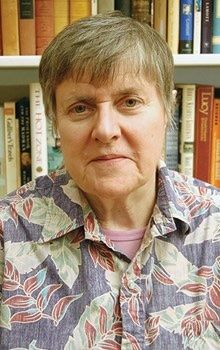
Kathleen Norris
Kathleen Norris is the award-winning poet, writer, and author of the New York Times bestselling books The Cloister Walk, Acedia & Me: A Marriage, Monks, and a Writer's Life, Dakota: A Spiritual Geography, Amazing Grace: A Vocabulary of Faith, The Virgin of Bennington, and several volumes of poetry. Exploring the spiritual life, her work is at once intimate and historical, rich in poetry and meditations, brimming with exasperation and reverence, deeply grounded in both nature and spirit, sometimes funny, and often provocative.
Widowed in 2003, Kathleen Norris now divides her time between South Dakota and Honolulu, Hawaii, where she is a member of an Episcopal church. She travels to the mainland regularly to speak to students, medical professionals, social workers, and chaplains at colleges and universities, as well as churches and teaching hospitals. For many years she was the poetry editor of Spirituality & Health magazine. She serves as an editorial advisor for the monthly Give Us This Day from Liturgical Press, and writes for a weekly e-newsletter, Soul Telegram: Movies & Meaning with her friend Irish storyteller Gareth Higgins.
Kathleen Norris is the award-winning poet, writer, and author of the New York Times bestselling books The Cloister Walk, Acedia & Me: A Marriage, Monks, and a Writer's Life, Dakota: A Spiritual Geography, Amazing Grace: A Vocabulary of Faith, The Virgin of Bennington, and several volumes of poetry. Exploring the spiritual life, her work is at once intimate and historical, rich in poetry and meditations, brimming with exasperation and reverence, deeply grounded in both nature and spirit, sometimes funny, and often provocative.
Widowed in 2003, Kathleen Norris now divides her time between South Dakota and Honolulu, Hawaii, where she is a member of an Episcopal church. She travels to the mainland regularly to speak to students, medical professionals, social workers, and chaplains at colleges and universities, as well as churches and teaching hospitals. For many years she was the poetry editor of Spirituality & Health magazine. She serves as an editorial advisor for the monthly Give Us This Day from Liturgical Press, and writes for a weekly e-newsletter, Soul Telegram: Movies & Meaning with her friend Irish storyteller Gareth Higgins.
Copyright © 2026
Tax ID: 92-0930963
Mailing Address
1205 E Oak Knoll Ct
Newberg, OR 97132
1205 E Oak Knoll Ct
Newberg, OR 97132
Resources
-
Join Our Newsletter
-
Donate
Social