
How the Birds Teach Me to Notice
Mar 2
/
Courtney Ellis
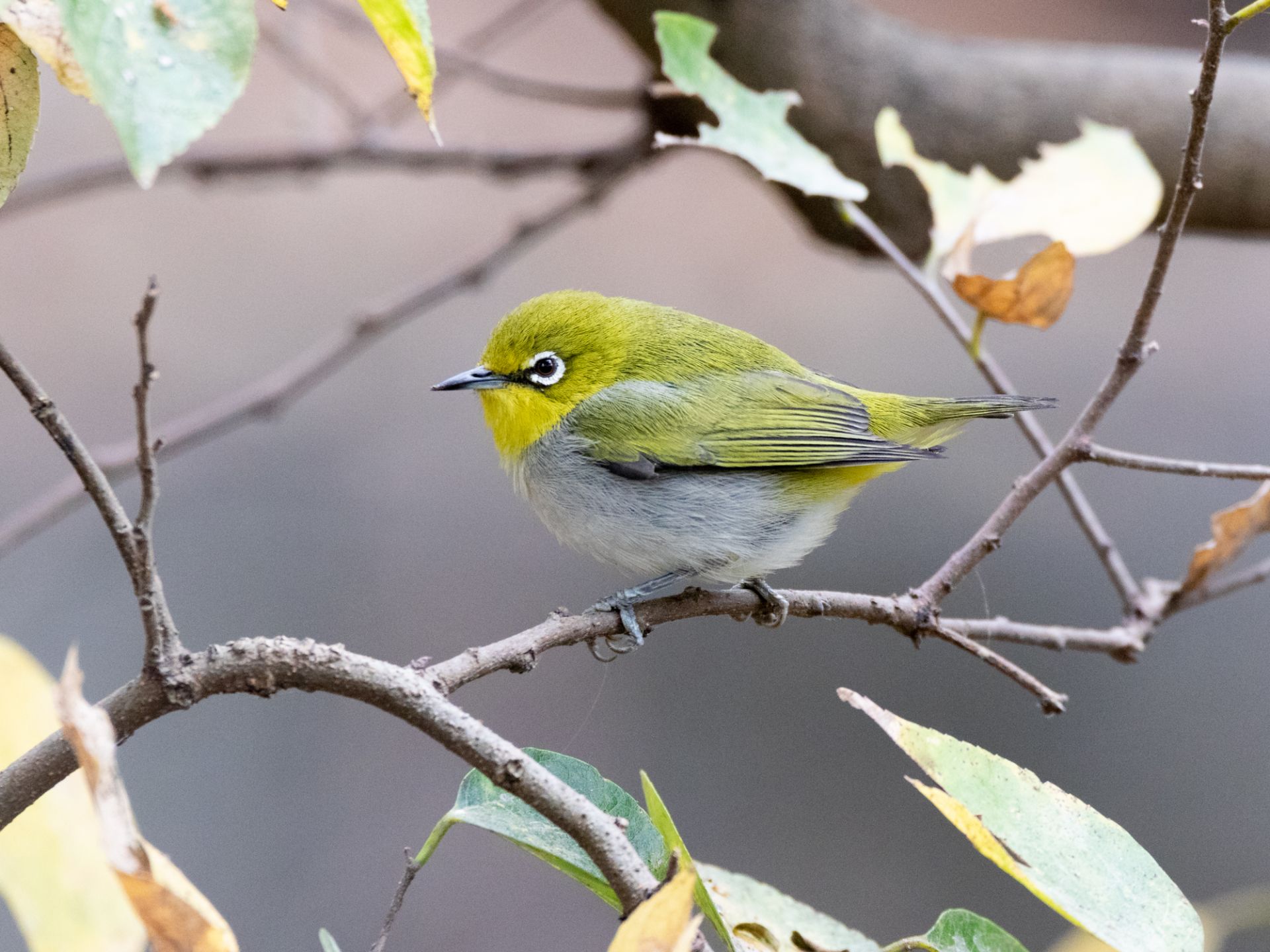
Image: (c) Colin Chiu – some rights reserved (CC BY-NC)
Many birders have a “nemesis bird,” insider-speak for a bird they just can’t seem to find, no matter how long they try. I once went on a guided tour with a woman who’d been studying Harris Hawks in South Texas for three years but had never seen a Cactus Wren.
“They’re not even that rare here,” she told me, “but I just can’t seem to find one.”
My nemesis was the Swinhoe’s White-eye, a little greenish-yellow warbler with a signature bright white ring around each eye. In the United States, it currently only exists in Orange County, California, where I live. It isn’t a common bird, but it isn’t uncommon, either. Still, after years of looking, I hadn’t spotted even one.
Birders have ways of finding tricky birds—we share information, peruse message boards, and log our sightings so that others can see what we’ve seen. When I drove to Downey to try to see the incredibly rare, vagrant Snowy Owl one January, I found it by the huge crowd of birders gaggled on the sidewalk. All the stereotypes about us—pants with too many pockets; big, goofy hats; nature-themed t-shirts—are true. I used to be cool. Now I have a shoulder harness for my binoculars.
All of my birding friends knew I was looking for the White-eye. They tried to help, sending me locations and photos of where they’d spotted this elusive little bird. I lost count of how many times I drove to a park or a trail only to hear, “It was just here! You just missed it!” Birds fly, after all. You can’t count on them staying put for long.
Finally, one January day in the middle of sermon preparation, my phone pinged.
“I found some on the golf course!” my birding friend Mark texted me, dropping a pin at a particular tree. “It’s just up the street from your church! Go now!” As a good birder, I always have a pair of binoculars in my car. Unlike a good pastor, I snuck onto the private golf course to try to see the bird I’d been dreaming about.
Swinhoe’s White-eyes sound like Star Wars blasters. Pew-pew! They sing from their perches at the very tops of trees. As I tiptoed onto the golf course, I heard the telltale call. I looked up. There it was.
For a birder, spotting a longed-for bird is a moment of absolute ecstasy and wonder. A bird we’ve only seen in books or photographs is suddenly there before us, in the feathery flesh. My breath caught in my throat. It was so beautiful. I watched it until a golf cart buzzed me, its driver giving me some serious side-eye, and then I headed back to church with renewed joy in my heart.
Then, a few days later, I saw another one. This time on the church patio, singing its cartoonish song from atop a sycamore tree. A week after that, there was one in our yard. Suddenly, this elusive bird I’d been seeking for years was absolutely everywhere. Pew-pew! Pew-pew-pew!
I often meet people who tell me there aren’t any birds in their yard. That they don’t see any out their windows because of the time of year or the weather or their location.
“Just go outside for ten quiet minutes and see what you see,” I tell them.
“There are birds in my yard!” come the incredulous emails and texts and phone calls very soon thereafter.
Here’s the thing: we can only see what we’re looking for. When I first began birding, I was astonished at how many birds there were. Different individuals. Different species. I couldn’t walk outside without being overwhelmed at their different songs and calls. I felt like I’d been dropped in the middle of a foreign country with a new language swirling all around me. It brought up the question: what else had I been missing?
My friend Keith tells me that he goes birding in part because it helps him learn how to see. As a pediatrician, his patients can’t always tell him what’s wrong. He has to notice a subtle yellowing of the skin or a slowing of pupillary reaction.
I’ve found that the same is true for my pastoring. Watching birds—the difference between one or two stripes on a wing bar, the subtle upturn of a beak, the size of a raven versus a crow—teaches me to pay attention to the needs of my congregants. A recent widow may not ask for a call, but I can notice the slump in her shoulders and reach out in love. A young teenager may never tell me he’s experiencing doubts, but when I see him glance down and away during the prayers, I may risk a probing question.
And beyond pastoring—watching the birds reminds me that God watches me. That I am seen and held in love and never abandoned.

Courtney Ellis
Courtney Ellis is the author of six books, most recently Weathering Change: Seeking Peace Amid Life’s Tough Transitions (February 2026, InterVarsity Press). She also hosts “The Thing with Feathers” podcast, all about birds and hope. She and her husband pastor Presbyterian Church of the Master in southern California where they are raising three children.
Courtney Ellis is the author of six books, most recently Weathering Change: Seeking Peace Amid Life’s Tough Transitions (February 2026, InterVarsity Press). She also hosts “The Thing with Feathers” podcast, all about birds and hope. She and her husband pastor Presbyterian Church of the Master in southern California where they are raising three children.

Copyright © 2026
Tax ID: 92-0930963
Mailing Address
1205 E Oak Knoll Ct
Newberg, OR 97132
1205 E Oak Knoll Ct
Newberg, OR 97132
Resources
-
Join Our Newsletter
-
Donate
Social